Stock Retention and Pick-Up Issues in Paper Machine Forming Fabrics: Causes and Corrective Actions
Abstract
Stock retention (also called “web pick-up”) on the forming fabric is a critical yet common problem in papermaking. It manifests as fibers, fines, and fillers adhering to the forming fabric after the sheet transfer point at the couch roll, instead of being cleanly released. This issue directly leads to reduced product quality, operational inefficiency, and increased maintenance costs. This article analyzes the root causes, from fabric design and condition to chemical interactions, and provides a systematic troubleshooting guide for resolution.
1. The Problem: Stock Retention and Pick-Up
Stock retention refers to the undesirable adherence of paper stock to the forming fabric after the sheet should have been transferred to the press section. This results in:
- Holes and Defects: Re-deposited stock causes holes, thin spots, and “pick” marks in the sheet.
- Basis Weight Variation: Uneven release leads to uneven sheet formation.
- Fabric Plugging: Accumulated material clogs the fabric mesh, impairing drainage, increasing drag, and reducing fabric life.
- Increased Breaks: The weakened sheet is more prone to breaks at the couch or in the press section.
- Higher Chemical Consumption: Attempts to counteract the issue often lead to increased use of cleaning chemicals or release agents.
2. Primary Causes and Corresponding Solutions
A. Forming Fabric Design and Condition
| Cause | Description | Corrective Actions |
|---|---|---|
| Worn or Damaged Fabric | A fabric that is over-aged, abraded, or has broken knuckles/junctions loses its smooth, non-stick surface. Frayed filaments provide more sites for fibers to anchor. | 1. Fabric Replacement: Establish a wear-based replacement schedule before extreme degradation. 2. Regular Inspections: Use off-machine inspections to check for surface wear, edge damage, and seam condition. |
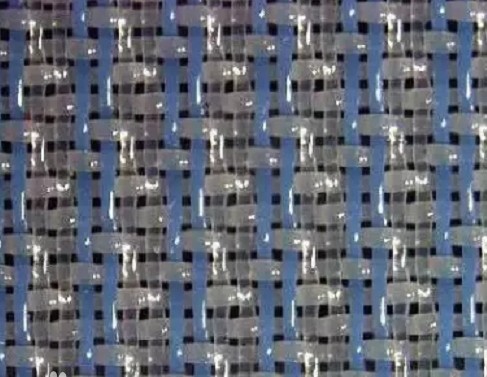
| Incorrect Fabric Design | The fabric’s weave pattern, mesh count, filament diameter, and surface topography are not optimized for the specific grade. A too-smooth or too-open surface can increase adhesion. | 1. Consult with Supplier: Review application with fabric supplier. 2. Consider Alternative Designs: Test fabrics with different weaves (e.g., more “shedding” oriented designs), surface treatments (e.g., anti-stick coatings), or materials (e.g., different polymer blends). |
| Poor Fabric Cleaning | Ineffective showers allow contaminants (pitch, stickies, fines, latex) to build up, creating a sticky, hydrophobic layer that bonds with fibers. | 1. Optimize Showers: Ensure high-pressure needle showers (oscillating) have correct pressure, angle, and nozzle condition. 2. Use Appropriate Chemistry: Implement on- or off-machine cleaning with formulated fabric cleaners for specific contaminants. 3. Check Filtration: Ensure shower water is clean and filtered. |
B. Papermaking Chemistry Imbalances
| Cause | Description | Corrective Actions |
|---|---|---|
| Pitch and Stickies Deposition | Natural wood resins (pitch) and synthetic adhesives (stickies) accumulate on the fabric, creating a tacky surface that holds fibers. | 1. Chemical Control: Use pitch control agents, dispersants, or talc in the wet end. 2. Fixing Agents: Adjust retention/drainage aid program to ensure fines/fillers are fixed in the sheet, not on the fabric. 3. System Cleanliness: Maintain good broke and whitewater system cleanliness. |
| Excessive Fines/Fillers | High loads of fine particles, especially certain fillers like PCC, can migrate into the fabric and form a packed, cake-like layer. | 1. Optimize Retention System: Improve first-pass retention to keep fines in the sheet. 2. Adjust Furnish: If possible, adjust the filler/broke ratio. 3. Enhanced Cleaning: Use combined chemical (acid/chelant) and mechanical cleaning. |
| Wrong pH or Conductivity | Extreme pH or high dissolved solids (high conductivity) can destabilize the colloidal system, causing premature deposition. | 1. Monitor and Control: Maintain stable, optimal wet-end pH (typically 4.5-7.5 depending on grade). 2. Manage Whitewater: Control system closure and fresh water use to manage conductivity. |
C. Machine Operation and Sheet Parameters
| Cause | Description | Corrective Actions |
|---|---|---|
| Poor Sheet Release at Couch | Inadequate vacuum at the couch roll or improper sheet dryness leads to weak fiber-to-fabric vs. fiber-to-fiber bonds, causing the sheet to split. | 1. Optimize Couch Vacuum: Ensure couch vacuum is correctly set for the grade and speed to achieve proper sheet dryness (~22-25% consistency). 2. Check Couch Roll: Ensure couch roll hole condition and doctor blade are good. 3. Forming & Drainage: Optimize forming table vacuum profile to ensure uniform dewatering. |
| Excessive Wet-End Additives | Overuse of some cationic polymers, defoamers, or softeners can create a sticky residue on fabrics and rolls. | 1. Audit Chemical Program: Review all additive dosages and injection points. 2. Optimize Addition Points: Ensure chemicals are well-distributed and not overdosed locally. |
| Low Sheet Consistency | A sheet that is too wet at the couch has weaker internal bonding, making it more likely to adhere to the fabric. | 1. Improve Formation/Drainage: Review forming board, foils, and vacuum unit settings to improve overall drainage profile. |
3. Systematic Troubleshooting Approach
- Visual Inspection: Immediately after a tail break, inspect the fabric. Is the pick-up uniform or in streaks? Is it fibrous, sticky, or chalky? This gives the first clue (e.g., streaks point to showers or doctor blades).
- Analyze Deposits: Scrape off a sample for lab analysis (FTIR, microscopy) to identify if it’s pitch, filler, fines, or a polymer.
- Review Recent Changes: Have there been changes in furnish, chemistry, grade, fabric type, or machine speed?
- Check Machine Parameters: Verify couch vacuum, forming vacuum profile, and all relevant shower operations.
- Start with Mechanical Solutions: Before adjusting chemistry, ensure all mechanical components (showers, doctors, vacuum systems) are functioning optimally.
4. Conclusion
Resolving stock retention and pick-up problems requires a holistic view of the paper machine forming section. It is rarely a single-factor issue. A disciplined approach that combines proper fabric selection and maintenance, precise control of papermaking chemistry, and stable machine operation is essential. Regular partnership with forming fabric and chemical suppliers for joint troubleshooting is highly recommended to achieve long-term, cost-effective solutions that ensure high sheet quality and machine efficiency.
Welcome to discuss more with Keylife, the professional manufacturer of paper machine forming fabric.