Executive Summary
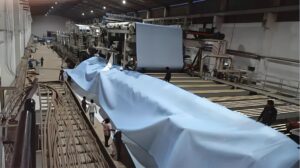
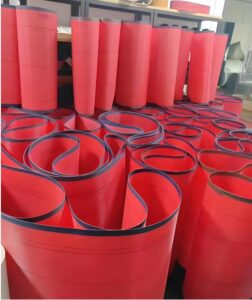
China is a global leader in the manufacturing and export of paper machine forming fabrics (also known as paper machine clothing or wires). The industry has evolved from a predominantly domestic supplier to a major international competitor, offering a combination of technological advancement, product diversification, and competitive pricing. This analysis examines the key characteristics, strengths, challenges, and major markets of China’s forming fabric exports.

1. Industry Overview and Position
- Scale: China is one of the world’s largest producers of forming fabrics, with a comprehensive industrial chain encompassing polymer monofilament, weaving, heat setting, and finishing.
- Evolution: The sector has shifted from producing low-cost, standard fabrics for commodity paper grades to manufacturing high-performance, customized products for advanced paper and board grades, including:
- Multi-layer fabrics (e.g., 2.5-layer, 3-layer)
- High-dewatering designs
- Advanced seam fabrics
- Fabrics for specialized applications (tissue, packaging, specialty papers).
2. Key Export Markets
China’s forming fabrics are exported worldwide, with primary markets segmented by development stage and paper industry focus:
- Established Paper Producing Regions:
- Southeast Asia: A primary and growing market. Proximity, lower tariffs (via trade agreements like ASEAN-China FTA), and massive investments in new paper mills (especially in Indonesia, Vietnam, Thailand, and Malaysia) drive strong demand for both new clothing and replacements.
- South Asia: India is a critical growth market, driven by expansion of its domestic paper industry. Pakistan and Bangladesh are also significant importers.
- Emerging Markets with Resource-Based Industries:
- South America: Brazil, Chile, and Argentina are key markets where Chinese suppliers compete with local and Western manufacturers, often leveraging cost advantages.
- Commonwealth of Independent States (CIS) & Middle East: Russia, Iran, and Turkey represent important markets where Chinese products balance performance and price effectively.
- Developed Markets (Niche/Specific Segments):
- North America & Europe: While these regions have strong domestic suppliers (e.g., Albany, Andritz, Voith), Chinese exporters are increasingly successful in:
- Supplying cost-competitive replacement fabrics for older paper machines.
- Catering to specific niches or paper grades.
- Partnering with local distributors.
- North America & Europe: While these regions have strong domestic suppliers (e.g., Albany, Andritz, Voith), Chinese exporters are increasingly successful in:
3. Competitive Advantages (Strengths)
- Cost Competitiveness: Lower manufacturing and operational costs translate to significant price advantages, particularly for standard and mid-range products.
- Complete Supply Chain: A fully integrated domestic supply chain for raw materials (polyester, polyamide, PPS monofilaments) ensures stable supply and cost control.
- Manufacturing Flexibility & Speed: Chinese manufacturers can offer shorter lead times and are highly responsive to custom orders and smaller batch sizes.
- Improving Technology & Quality: Significant R&D investment has closed the quality gap with Western leaders in many product categories. Many top Chinese manufacturers hold international quality certifications (ISO, etc.).
- Government Support: The industry benefits from national policies promoting advanced manufacturing and export.
4. Challenges and Weaknesses
- Perception of Quality: In some high-end markets, a lingering perception remains that Chinese products may not match the longevity or precision of top-tier Western brands, though this is rapidly changing.
- Intellectual Property (IP) Concerns: Past issues with design imitation can still create hesitation among some international customers regarding IP protection.
- Intense Domestic Competition: A crowded domestic market pressures profit margins and can sometimes lead to price-based competition rather than value-based competition abroad.
- Logistics & Geopolitical Risks: Global supply chain disruptions and international trade tensions can impact export stability and cost.
- After-Sales Service: While improving, establishing a robust, localized technical service and support network in distant markets remains a challenge compared to global competitors with longstanding local presence.
5. Future Outlook and Trends
- Market Consolidation & Upgrading: The industry will continue to consolidate, with leading Chinese firms expanding through acquisitions and heavy R&D investment to move further up the value chain.
- Focus on Sustainability: Development of energy-efficient, durable, and recyclable fabrics will become a key differentiator in environmentally conscious markets.
- Digitalization & Smart Manufacturing: Adoption of Industry 4.0 practices will enhance production efficiency, consistency, and enable more sophisticated product customization.
- Strategic Local Presence: Successful exporters will increasingly establish overseas warehouses, service centers, and technical partnerships to better serve key markets and build long-term customer relationships.
Conclusion
China’s paper machine forming fabric export market is robust and transitioning from a volume-driven to a value-driven model. By leveraging its core strengths in cost, supply chain, and increasing technological prowess, while actively addressing challenges in branding, service, and innovation, the sector is well-positioned to expand its global market share. Future growth will be strongest in fast-developing paper regions like Southeast Asia and South Asia, with continued penetration into specific segments of developed markets.