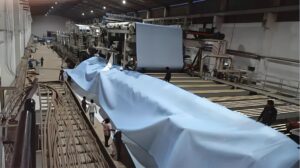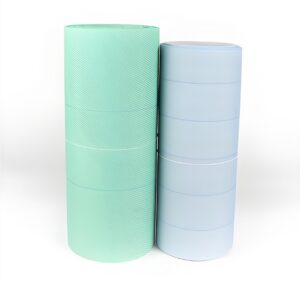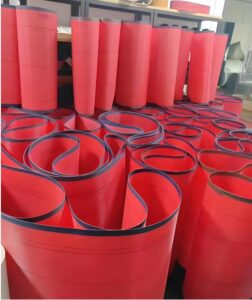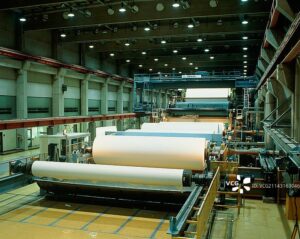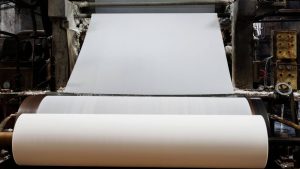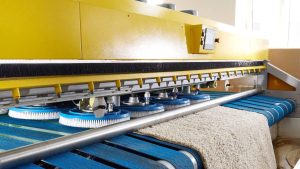
The global press felt market in 2026 is defined by a rigorous push toward energy efficiency, high-speed optimization, and the massive surge in sustainable packaging demand. As paper machine speeds frequently exceed 1,500 m/min, the technical requirements for press fabrics have shifted from simple water removal to complex “structural engineering”.

1. Market Size and Regional Dynamics
The Paper Machine Clothing (PMC) market, of which press fabrics are a critical segment, is valued at approximately $2.74 billion in 2026.
Asia-Pacific Leadership: This region dominates with a 50% global market share. The growth is primarily fueled by over 50 new paper machine installations scheduled in India and Southeast Asia by 2026 to support e-commerce and hygiene demand.
North America and Europe: These markets focus on premium, high-performance felts. Demand here is driven by strict environmental regulations and a shift toward specialty papers, with the U.S. alone seeing press felts account for 43% of all machine clothing usage.
2. Key Industry Drivers
The landscape in 2026 is being reshaped by three primary factors:
Plastic-to-Paper Substitution: Global packaging board production has grown by nearly 19% in major markets like China and India, directly increasing the consumption of heavy-duty press felts.
The “Recycled Fiber” Challenge: With recycled fiber content now often exceeding 70% in corrugated packaging, press felts face 32% more contaminant contact and increased abrasion. This has forced a market shift toward more durable, chemically resistant synthetic fibers.
Energy Costs: Pressing is significantly more energy-efficient than thermal drying. Modern “low-water-retention” felts are in high demand because they can reduce dryer energy usage by up to 12%.
3. Technological Innovations in 2026
The “commodity” felt is disappearing, replaced by highly engineered structures:
| Technology | Impact in 2026 |
| Multi-Layer Composites | Now capture over 35% of new installations; they provide the “void volume” needed for high-speed dewatering. |
| Self-Healing Textiles | Emerging light-responsive polymers can repair small abrasions without human intervention, extending felt life. |
| AI-Based Monitoring | Adoption of AI for condition monitoring has reached 19%, allowing mills to predict felt failure with 85% accuracy. |
| Non-Woven Base Designs | Shifting away from traditional woven bases to reduce “marking” on high-grade packaging and tissue. |
4. Strategic Challenges and Outlook
Despite the growth, the market faces significant headwinds in 2026. Raw material volatility for polyester and polyamide (nylon) has seen cost fluctuations of up to 30% year-on-year, squeezing margins for manufacturers. Additionally, the industry is struggling with a 26% shortage in skilled labor capable of performing complex felt installations.
Looking Forward: The market is expected to reach $3.94 billion by 2035, maintaining a steady CAGR of 4.2%. The winners in this space are those moving toward “circularity,” using bio-based materials and recycled fibers that satisfy the growing global mandate for a sustainable paper value chain.