The global Paper Machine Clothing (PMC) market, including forming fabric, is currently undergoing a significant shift in its “center of gravity.” As of 2026, the industry is valued at approximately $2.74 billion, with a projected climb toward $3.94 billion by 2035.
While traditional powerhouses in Europe and North America remain leaders in high-speed, premium technology, the Asia-Pacific region—specifically China—now dominates with over 50% of the global market share.
Recent advancements in forming fabric technology are expected to drive further innovations in the market.
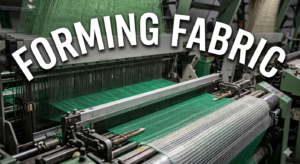
1. The Global Market Landscape: Efficiency & Sustainability
The current market is defined by a move toward high-speed machines (operating at over 1,800 m/min) and an intense focus on energy reduction.
Forming Fabrics (45–55% Market Share): This remains the largest segment. The trend has shifted heavily toward SSB (Sheet Support Binding) triple-layer fabrics, which offer superior drainage and fiber support for high-speed tissue and fine paper production.
Dryer Fabrics (15–20% Market Share): Innovations here focus on hydrolysis resistance and flat yarn designs. The goal is to maximize heat transfer and minimize the “boundary layer” of air, which can reduce steam consumption by up to 12%.
Digital Integration: We are seeing the rise of “Smart PMC,” where fabrics are embedded with sensors to monitor wear and permeability in real-time, feeding data directly into mill automation systems.
2. The Rise of Chinese Brands: From Value to High-Tech
Chinese manufacturers have transitioned from being “low-cost alternatives” to “technology-driven competitors.” Brands like Keylife, Sichuan Vanov, and Hebei Hehuang are now challenging the “Big Five” (Albany, Valmet, Voith, Andritz, AstenJohnson) by offering specialized, high-performance fabrics at a lower total cost of ownership.
Keylife (Guangzhou Keylife Textile Co., Ltd.)
Keylife has emerged as a standout representative of the “new generation” of Chinese PMC. Their market strategy focuses on niche technical superiority rather than just volume.
Specialization: They are widely recognized for their Hydrolysis Resistant Spiral Dryer Fabrics and SSB Triple Layer Forming Fabrics.
Competitive Edge: Keylife’s reputation is built on balancing European material standards (often sourcing polymers like Perlon from Germany) with agile manufacturing. This allows them to provide customized fabrics for specific machine configurations faster than many legacy Western brands.
Export Strength: Unlike older Chinese brands that focused solely on the domestic market, Keylife has established a strong presence in the Middle East, Southeast Asia, and South America, positioning itself as a “bridge” between high-end performance and cost-efficiency.
Other Notable Chinese Players
Sichuan Vanov: A massive player recently making waves in the press felt and forming fabric sectors, often cited in global market reports alongside top-tier vendors.
Hebei Hehuang: One of the oldest and largest, with a massive production capacity (over 800,000 $m^2$ annually), specializing in heavy-duty fabrics for packaging and board machines.
Jiangsu Jinni: Strong in the domestic Chinese market, particularly for high-speed newsprint and packaging grades.
3. Market Drivers in 2026
The current demand is being pulled by three specific forces:
The E-commerce Boom: Over 60% of PMC consumption is now driven by Wrapping and Packing Paper. As global online retail exceeds $6 trillion, the need for durable fabrics that can handle recycled fibers (which are more abrasive) has surged.
The Plastic-to-Paper Shift: Environmental regulations are forcing a shift toward paper-based packaging, creating a “structural uplift” for PMC suppliers who can provide fabrics for molded pulp and kraft liner.
Regional Modernization: China and Southeast Asia (Vietnam, Indonesia) are currently the primary sites for “Greenfield” projects—brand-new paper mills that require the latest SSB forming and flat-yarn dryer technologies from day one.
4. Challenges: The “Cost vs. Life” Paradox
Despite growth, the market faces a squeeze. Raw material costs for high-performance polymers (PPS and Aramids) have risen, while large paper groups (like Nine Dragons or Lee & Man) use their massive buying power to press for lower prices.
For brands like Keylife, the challenge in 2026 is no longer proving that they can make a fabric that works—it’s proving that their fabrics can match the operational life of a Western-made fabric on a 2,000 m/min machine. Current data suggests they are closing this gap rapidly, with Chinese-made SSB fabrics now achieving nearly 90–95% of the lifespan of their European counterparts at roughly 70% of the price.