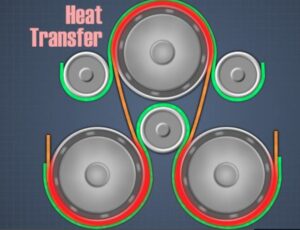
The global paper machine clothing (PMC) market is dominated by a few elite industrial leaders: Albany International, Voith Paper, AstenJohnson, and Valmet. Rather than just manufacturing standard single- or double-layer meshes, these companies have engineered proprietary, highly specialized technical sub-categories of woven dryer fabrics to handle the intense demands of modern, high-speed machines.




The main technical categories engineered by these industrial giants, along with their distinct advantages and disadvantages, are outlined below.
1. Minimal-Intersection / Low-Internal-Void Fabrics (Voith CleanWeave / Magma)
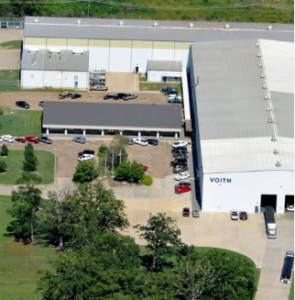
Traditional woven fabrics have countless overlapping “knuckles” (yarn intersections) that act like tiny pockets, trapping sticky polymers, pitch, and fiber. Voith revolutionized this with a technical category focused on altering structural geometry to minimize internal void space while keeping high external permeability.
Key Proprietary Technologies: Voith CleanWeave and Magma (designed for extreme thermal positions).
How it Works: The weave is engineered with elongated yarn floats and minimal cross-over points. When the fabric flexes around container rolls and cylinders, it actively forces dirt out.
Advantages:
Contamination Immunity: Phenomenal resistance to “stickies” and sizing agents, maintaining uniform permeability without blinding.
Easy to Clean: Responds beautifully to high-pressure continuous showering system configurations without trapping water internally.
Disadvantages:
The specialized weave can have slightly lower structural cross-machine (CD) stiffness compared to traditional stiff multi-layer structures, which requires highly precise machine alignment to prevent slight edge curling.
2. Shifted Neutral-Line / Asymmetric Unbacked Fabrics (AstenJohnson SpeedTec & MonoTier)
On high-speed single-tier or single-felted positions, the paper web alternates from being inside the fabric against the heated cylinder to being on the outside around vacuum turning rolls. This creates a speed differential (draw stress) that stretches and weakens the paper sheet. AstenJohnson engineered a category featuring an asymmetrical weave to combat this mechanical stress.
Key Proprietary Technologies: AstenJohnson SpeedTec™ and MonoTier® platforms.
How it Works: They weave two completely independent machine-direction (MD) warp systems into an asymmetrical structure, shifting the fabric’s internal “neutral line” (the plane of zero mechanical strain during flexing).
Advantages:
Drastic Draw Reduction: Minimizes sheet elongation and structural web stress as it moves between dryers and vacuum rolls, directly decreasing the frequency of machine breaks.
Micro-structured Sheet Side: The top MD yarns are micro-textured to disrupt boundary-layer air carrying, reducing high-speed sheet flutter.
Disadvantages:
Premium Cost: The dual independent warp geometry requires highly complex manufacturing setups.
High Thickness Profile: It features a larger caliper than standard single-layers, requiring optimized pocket ventilation to handle potential air pumping.
3. High-Contact Asymmetric Double-Warp Fabrics (Valmet EOS, OR, & SSO)
Valmet’s core woven dryer strategy relies heavily on specialized double-warp architectures that maximize surface area without shifting to thick, heavy triple-layer weaves.
Key Proprietary Technologies: Valmet Dryer Fabric OR (for fine/printing papers), EOS & DG (for packaging/anti-contamination), and SSO / SSH (100% PPS chemical-resistant positions).
How it Works: They utilize a distinct double-warp structure that packs flat monofilament yarns tightly on the paper-contact side while leaving the machine side open.
Advantages:
Thermal Efficiency: Achieves massive sheet contact surface areas (up to 45 – 47%), driving rapid heat transfer from the cylinder.
Excellent Tail Threading: The ultra-smooth top profile creates uniform vacuum hold, making tail threading exceptionally stable.
Accident & Jam Resistance: The double-warp configuration provides structural redundancy; if an localized object cuts a yarn, the secondary warp locks the structure to prevent a catastrophic fabric tear.
Disadvantages:
High Cleaning Dependency: The tight, flat-yarn paper-side matrix acts like a shield but can mask fine contaminants that migrate into the lower matrix, meaning it requires targeted chemical or high-pressure needle showers to maintain its profile.
4. Advanced Seam-Integrated High-Speed Woven Fabrics (Albany International)
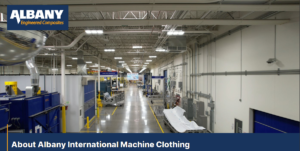
Albany International focuses heavily on the structural weak point of any woven fabric: the seam. They engineered a category of highly aerodynamic, multi-layer fabrics where the woven structure seamlessly flows into patented, integrated loops to prevent boundary-layer air disruption.
Key Proprietary Technologies: Albany AeroDry series and advanced integrated warp-loop structures.
How it Works: The machine-direction yarns are meticulously looped back into the multi-layer fabric body during weaving to form a non-marking, zero-bulge pin or spiral seam that matches the exact thickness of the fabric body.
Advantages:
Zero Air Disruption: Eliminates the “seam bump” that pumps air into the drying pocket at high speeds (>1200 m/min), completely neutralizing seam-induced sheet flutter.
No Seam Marking: The uniform profile eliminates pressure differences at the seam, preventing localized markings on lightweight, sensitive sheets.
Disadvantages:
Installation Precision: Because the integrated seam matches the tight structural weave perfectly, joining the fabric on the machine requires precise alignment and can take slightly longer during installation than a loose, forgiving generic spiral seam.
Technical Summary Matrix
| Fabric Type / Leader | Core Structural Concept | Best Application | Main Trade-Off |
| Voith CleanWeave | Minimal yarn intersections | Contaminated / Recycled Furnish (OCC) | Requires meticulous alignment |
| AstenJohnson SpeedTec | Asymmetric dual-warp system | High-speed single-tier (early sections) | Premium price & high caliper |
| Valmet EOS / OR | High-density flat double-warp | Print/Writing & High-Performance Board | High cleaning system dependency |
| Albany AeroDry / Integrated | Aerodynamic, flat-seamed multi-layer | High-speed machines with sensitive sheets | Demands highly precise installation |