Current engineering in paper machine dryer fabrics focuses heavily on altering the physical yarn structure and geometry to provide passive contamination resistance. While material additives (like PVDF or PPS) lower surface energy, the physical architecture of the yarn dictates how easily stickies, pitch, and chemical residues can mechanically lock into the fabric mesh.
1. Cross-Sectional Yarn Geometry: Flat vs. Round
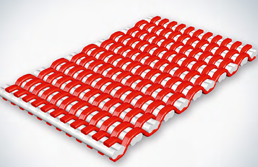
Standard dryer fabrics historically relied on round monofilaments, which create deep, microscopic “V-shaped” valleys where warp and weft yarns intersect. Modern contamination-resistant fabrics replace or complement these with non-round profiles:
Flat and Rectangular Warp Yarns: By utilizing flat monofilaments in the machine direction (MD), the fabric surface becomes a highly planar, continuous shield. This minimizes the physical pocket depth between yarn interlacings. Without these deep recesses, secondary fibers, stickies, and calcium carbonate have no anchoring points and are easily swept away by continuous traversing showers.
Knife-Edge / Low-Caliper Profiles: Flat yarns drastically reduce the overall caliper (thickness) of the fabric. A thinner fabric minimizes the internal void volume. High void volume acts like a sponge for micro-contaminants; low-caliper flat structures ensure that any dirt entering the fabric can easily pass entirely through or be washed off the surface.
2. Micro-Grooved Filament Technology (Structural Channels)
One of the most elegant structural innovations is modifying the outer topography of the monofilament itself rather than keeping it perfectly smooth.
Micro-Grooves (e.g., AstenJohnson’s Smart Surface Technology): The broad, flat contact areas of flat yarns can sometimes act as a perfect bonding pad for wide, tacky stickies. To prevent this, individual yarns are extruded with microscopic longitudinal grooves running along their length.
The Release Mechanism: When a piece of sticky material lands on a micro-grooved yarn, it cannot establish full surface contact because it only touches the “peaks” of the grooves. Crucially, the “valleys” form micro-channels beneath the contaminant. During high-pressure showering, water or cleaning chemicals penetrate these channels, getting underneath the sticky deposit to hydraulically float it off the fabric.
3. Weave Architecture & Interlacing Points
The way the yarns are woven together fundamentally changes the fabric’s susceptibility to contamination.
Single-Layer “CleanWeave” Concepts (e.g., Voith Jade): Double-layer fabrics naturally feature structural interior cavities that trap dirt. Advanced contamination resistance utilizes single-layer, high-density architectures engineered with the minimum possible cross-over points. Fewer yarn interlacings mean fewer structural nooks where chemistry can bake and crystallize.
Asymmetric Multi-Warp Structures: Modern structures use a dual-warp system where the paper-facing side uses exclusively flat monofilaments for maximum sheet contact and cleanliness, while the roll-facing side utilizes tougher, round or square structured yarns (often 100% PPS or heavy PET) to maximize wear resistance and mechanical driving stability without compromising the clean run of the top layer.
4. Elimination of Texturized “Stuffers”
In the past, to control air permeability (CFM) in early, high-contamination dryer sections, manufacturers wove spun yarns or cabled multifilament “stuffers” into the cross-machine direction (CMD).
All-Monofilament Paradigm: Current technology strictly avoids texturized or cabled yarns in contamination-prone positions. Spun fibers act like a mechanical wick, absorbing moisture, size, and oils, which rapidly glues the structure shut. Modern low-perm fabrics achieve low CFM purely through ultra-dense monofilament packing (e.g., warping flat yarns tightly edge-to-edge), ensuring the entire structure remains non-porous and highly cleanable.