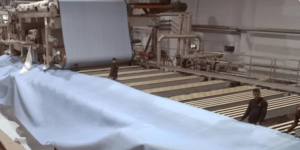
In modern papermaking, the dryer section is the largest, most capital-intensive, and most energy-demanding part of the entire machine. While forming fabrics handle initial sheet consolidation and press felts remove water mechanically, dryer fabrics carry the paper sheet across steam-heated cylinders to evaporate the remaining moisture—bringing the paper from ~40–45% dryness up to its final 92–95% target.
Despite being a continuous consumable, the dryer fabric is far more than a simple conveyor belt: it is an engineered thermodynamic interface that dictates sheet runnability, surface quality, and mill energy consumption.
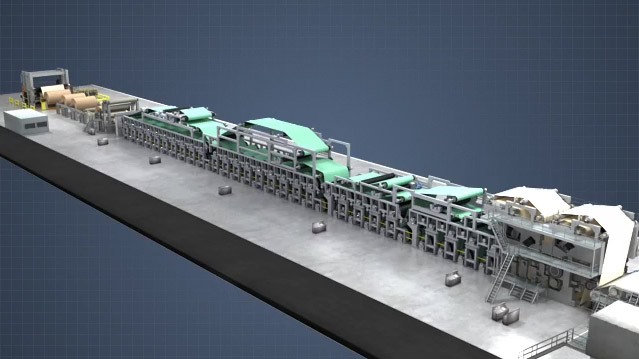
1. The Core Role: Heat Transfer & Vapor Evaporation
When a wet paper web enters the dryer section, gravity and vacuum forces are no longer effective for water removal. Thermal evaporation takes over.
The dryer fabric serves three primary functional objectives:
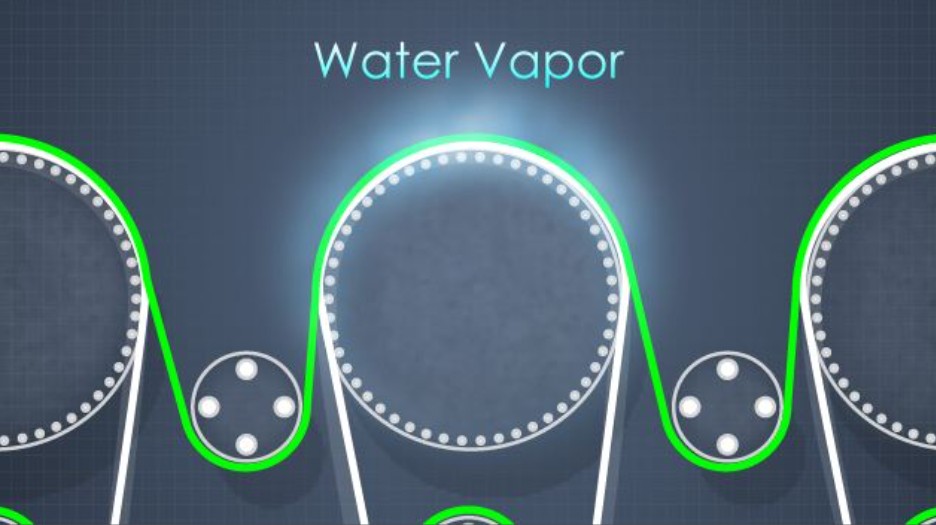
Sheet Support & Tensioning: Presses the moist web firmly against the polished surfaces of steam-heated dryer cans to maximize thermal conductivity.
Vapor Permeability: Allows evaporated steam to escape freely through the fabric mesh into the pocket ventilation system.
Sheet Guidance: Maintains web stability at high operating speeds (often exceeding 1,000 m/min), preventing sheet flutter, wrinkling, and edge tears.
Key Takeaway: Contact pressure between the paper sheet and dryer cylinder directly governs thermal heat transfer rates. A loss of fabric tension or improper fabric permeability leads immediately to higher steam consumption and reduced machine speed.
2. Fabric Classifications: Woven vs. Spiral Fabrics
Selecting the right dryer fabric structure depends heavily on the paper grade (e.g., packaging, newsprint, fine paper, tissue), machine speed, and environmental conditions (temperature and humidity).
Woven Dryer Fabrics
Woven fabrics consist of warp (machine direction – MD) and wefts (cross-machine direction – CMD) monofilaments woven in multi-layer patterns.
Flat Monofilament Designs: Uses rectangular or oval filaments instead of round ones. Flat yarns create a smoother contact surface, reducing markability on sensitive grades and lowering aerodynamic drag.
Multi-Layer Weaves: Double-layer or 1.5-layer structures provide high dimensional stability, resisting diagonal distortion (skewing) across wide machine widths.
Spiral Dryer Fabrics
Constructed by interlinking helical monofilament spirals with cross-pinnles (joiner wires).
Seam-Free Architecture: Because the entire fabric is made of uniform spiral loops, it eliminates traditional seam failure points.
High Permeability Range: Ideal for dryer positions where high air permeability (400–900 CFM) is needed, particularly in board and packaging machines.
Easy Installation: Extremely simple to join on-site, significantly reducing machine downtime during fabric changes.
3. Dryer Fabric Parameter Matrix
| Parameter | Function / Impact | Common Operational Range | Key Considerations |
| Air Permeability | Controls vapor release & pocket air movement | 70 — 800 CFM (ft^3/ft^2/min @ 127 text Pa) | Too high causes sheet flutter; too low traps moisture and reduces drying speed. |
| Contact Area | Percentage of fabric surface contacting the sheet | 20% — 50% | Higher contact area improves heat transfer and reduces sheet marking on graphic paper. |
| Caliper (Thickness) | Fabric stability and internal void volume | 1.2 — 2.5 mm | Thinner fabrics carry less boundary air, reducing sheet instability at high speeds. |
| Hydrolysis Resistance | Ability to withstand wet heat without polymer breakdown | High hydrolysis PET / PBT / PPS | High-humidity positions require modified polymers or raw material blends. |
4. Industry Secrets: What Keeps Performance High & Costs Low?
Experienced paper machine specialists look beyond basic specifications to optimize dry-end efficiency. Here are the critical levers that separate standard performance from world-class operation:
Secret #1: Hydrolysis Is the Hidden Fabric Killer
In the first few dryer groups, humidity levels reach near-saturation at temperatures between 90 and 130C. Under these conditions, standard Polyethylene Terephthalate (PET) polymers undergo hydrolytic degradation—the polymer chains break down chemically, causing the filaments to become brittle and snap long before physical wear occurs.
The Solution: Premium dryer fabrics utilize carbodiimide stabilizers blended into PET, or incorporate PPS (Polyphenylene Sulfide) materials in high-temp/high-humidity positions to extend operational lifespan by 30% to 50%.
Secret #2: Aerodynamic Drag & “Boundary Air” Control
At high operating speeds, a fast-moving dryer fabric carries a boundary layer of air along its surface. When this air hits the nip between the fabric and roll, it creates a high-pressure air wedge that blows the paper sheet away from the fabric (causing sheet flutter or edge drop-offs).
The Solution: Utilizing smooth flat-warp monofilaments and engineered low-caliper profiles minimizes boundary air carrying capacity, allowing stable high-speed web handling without requiring extra vacuum rolls.
Secret #3: The Non-Marking Seam Art
The seam is traditionally the weakest link in any woven fabric—both mechanically and visually. An improper seam causes recurring marks on paper rolls every revolution.
The Solution: Modern inline loop seams feature warp yarns woven back into the fabric body with exact pitch matching. Filling the seam zone with specialized low-density monofilament stuffer yarns ensures permeability at the seam matches the body fabric within 5%.
Secret #4: Contamination Resistance (Contam-Shield Coatings)
Stickies, pitch, resin, and recycled fiber fines deposit heavily on dryer fabrics, blocking permeability pores and causing uneven drying profiles across the sheet.
The Solution: Fluoropolymer or silicone surface coatings decrease surface energy, preventing pitch and adhesive contaminants from bonding to the monofilaments. High-pressure air and needle-jet water showers clean the fabric continuously during operation.
5. Best Practices for Installation & Maintenance
Verify Tension Uniformity: Maintain dryer tension within recommended limits (typically 1.5 — 3.0 kN/m). Uneven cross-machine tension profiles cause diagonal fabric distortion and localized wear.
Monitor Pocket Ventilation: Ensure supply air systems feed warm, dry air into the fabric pockets. Wet pockets neutralize even the best fabric permeability.
Routine Permeability Audits: Measure CFM permeability across the front, center, and back of the fabric using a portable air permeability meter every month to track contamination build-up and schedule targeted chemical washes.