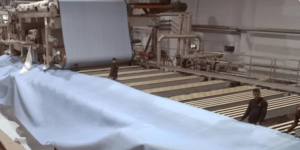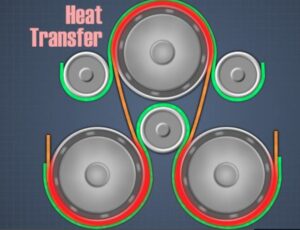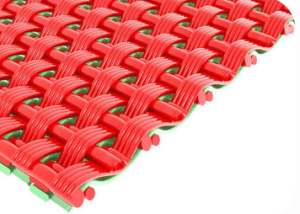
From a design and manufacturing perspective, felt producers maintain the dimensional stability of a paper machine press felt by controlling base fabric design, yarn selection, heat setting/stretching, and needle punching.
Felt manufacturers like Keylife engineer stability through precise manufacturing and finishing stages:
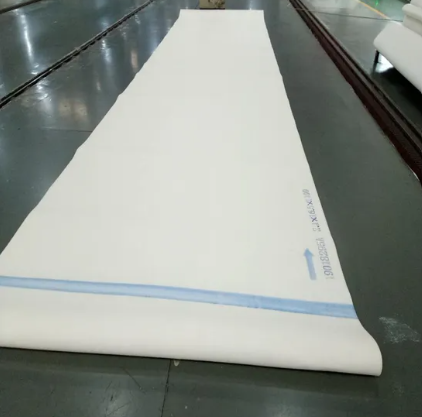
1. Base Fabric Architecture & Weaving
- Multi-Layer Structures: Single-layer base fabrics stretch and narrow easily under tension. Manufacturers use double-layer, triple-layer, or non-woven vector (laminated/batt-folded) structures to lock the MD (machine direction) and CD (cross direction) dimensions.
- Monofilament vs. Multifilament Yarns: Using high-tenacity monofilament polyamide (Nylon 6, 6-6, or 6-10) in the load-bearing MD threads minimizes longitudinal stretch under running tension.
- CD Stabilizing Yarns: Stiffer, larger-diameter yarns are woven into the cross direction to resist CD compaction and prevent the felt from narrowing or fluting across the machine width.
2. Thermo-Mechanical Finishing (Heat Setting & Pre-Stretching)
- Controlled Heat Setting: The woven base fabric and assembled felt are processed through a heat-setting frame (tension rig) at elevated temperatures (typically 180°C to 220°C). This relieves internal stresses in the synthetic polymer chains and sets the molecular structure.
- Pre-Stretching to Elastic Limit: By applying controlled longitudinal tension during heat treatment, the felt is pre-stretched beyond its operational tension range. This eliminates post-installation “permanent elongation” (initial stretch) on the paper machine.
- CD Width Setting: Pin stenters or expansion rolls hold the felt at the target width during heat setting to prevent cross-machine shrinkage during operation.
3. Precision Needle Punching (Batt Anchorage)
- Balanced Needle Density & Penetration Depth: Layering batt fibers onto the base fabric requires uniform needle punching. Over-needling damages the load-bearing MD base yarns, reducing tensile strength and causing elongation. Under-needling leads to batt movement, localized compaction, and distortion.
- Gradient Batt Structures: Applying finer fibers on the sheet side and coarser fibers on the roll side creates structural balance, preventing internal shear forces that cause felt bowing or skewing.
4. Chemical Treating & Impregnation
- Polymer / Resin Impregnation: Specialty chemical coatings or polyurethane/epoxy resin treatments are applied to the yarn intersections. This locks the weave junctions, drastically improving resistance to diagonal shear, skewing, and compaction.
- Hydrophobic/Hydrophilic Balancing: Chemical treatments reduce water absorption into the core synthetic fibers, preventing moisture-induced swell and dimensional distortion during machine startup and wash cycles.
5. Dimensional Quality Control & Testing
- Tension-Width Profiling: Prior to shipping, felts undergo dynamic running tests on full-scale tension rigs to measure width-to-length variation under simulated operational tensions (e.g., 2.0–6.0 kN/m).
- Ultrasonic / Laser Measurement: Continuous automated scanning ensures uniform thickness, weight (GSM), and density across the entire length and width.