Key Paper Mills in Vietnam
Vietnam’s paper industry is heavily driven by industrial packaging (containerboard, corrugated box board) and tissue, backed by a mix of major Chinese and Taiwanese FDI investments and domestic leaders.
1. Chinese & Taiwanese FDI Mills (High Capacity, Advanced Machinery)
These mills operate modern, high-speed machines and consume substantial quantities of Paper Machine Clothing (PMC) products, including forming fabrics, press felts, and dryer fabrics.
- Lee & Man Paper (Hau Giang): One of the largest containerboard manufacturers in Vietnam, operating high-capacity, high-speed machines.
- Nine Dragons Paper / Cheng Yang Paper (Binh Duong): Nine Dragons operates through Cheng Yang Paper, running large-scale containerboard lines.
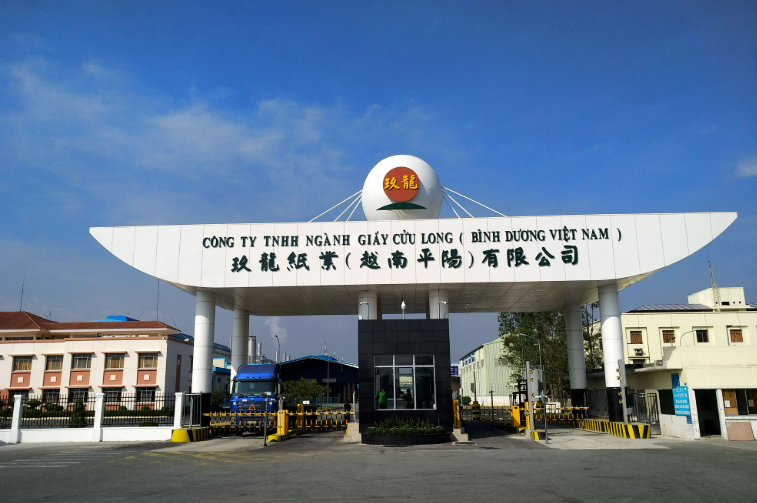
- Cheng Loong Binh Duong Paper (Binh Duong): Major Taiwanese packaging giant running multi-phase high-speed paper machines.
- Vina Kraft Paper (SCG Packaging) (Binh Duong): Joint venture between Siam Cement Group (Thailand) and Rengo (Japan), producing top-grade packaging paper.
- Kraft of Asia Paperboard & Packaging (KOA) (Ba Ria – Vung Tau): Subsidiary of Marubeni Corporation running modern board machines.
2. Major Domestic & Joint-Venture Manufacturers
- Thuận An Paper (Binh Phuoc & Binh Duong): Rapidly expanding domestic giant with total production capacity exceeding 720,000 tons annually.
- Saigon Paper Corporation (Ba Ria – Vung Tau): One of Vietnam’s premier domestic brands in packaging and consumer tissue, acquired by Sojitz Corporation.
- Dong Hai Joint Stock Company of Bentre (DOHACO): Major local player in industrial containerboard.
- Miza Nghi Son / Miza Joint Stock Company (Thanh Hoa & Ha Noi): Significant regional player expanding containerboard capacity.
- Xuan Mai Paper / Hoang Ha Paper / HHP Global: key northern and southern players focused on recycled board and tissue production.
Strategic Entry Blueprint for Chinese PMC Suppliers
Entering the Vietnamese PMC market requires addressing three key operational factors: competition against European suppliers (e.g., Voith, Albany, AstenJohnson), strong existing networks from Chinese paper giants, and localized technical service needs.
Phase 1: Tiering Your Target Accounts
- Tier 1 (FDI Giants – Lee & Man, Nine Dragons, Cheng Loong):
- Advantage: Executives, production managers, and machine superintendents are often Chinese expatriates. Communication, trust-building, and commercial practices mirror mainland China.
- Tactics: Engage head offices or plant managers directly using existing customer relationships or cross-referencing performance data from their parent mills in China.
- Tier 2 (Large Domestic Mills – Thuận An, DOHACO, Miza):
- Advantage: Highly cost-sensitive and actively looking for high-quality alternatives to expensive European PMC brands.
- Tactics: Offer competitive lead times, flexible payment terms, and trial runs tied to cost-per-ton guarantees.
Phase 2: Channel Strategy & Local Presence
- Establish a Local Representative / Exclusive Agent: Vietnamese paper mills rarely import consumable wear-parts without a local contact for rapid troubleshooting. Partner with a local agent in Binh Duong/Ho Chi Minh City (South) and Bac Ninh/Hanoi (North) who handles logistics, customs clearance, and initial customer support.
- On-Site Technical Service Teams: Paper machine clothing isn’t sold purely as a commodity—it is sold on machine runnability, dewatering efficiency, and felt life. Deploying bilingual technical sales engineers (fluent in Mandarin and Vietnamese) who can conduct on-site measurements (e.g., moisture profile analysis, tension monitoring, felt washing optimization) will give you a decisive edge over remote traders.
Phase 3: Trial-Run Strategy & Value Proposition
- The “Low-Risk” Trial Approach: Paper mills fear machine downtime above all else. Pitch trials on non-critical positions (e.g., bottom dryer positions or slower auxiliary lines) before moving into high-speed top-forming fabrics or heavy-duty press felts.
- Cost-per-Ton Economics: Present clear ROI calculations comparing performance lifecycle against price. Highlight faster delivery times (shipping from South China to Vietnam takes days, compared to weeks/months from Europe).
- Cross-Border Support: Offer immediate emergency replacement guarantees from inventory stocked nearby in Southern China or local bonded warehouses in Vietnam.