Severe wearing of the forming fabric on a high-speed tissue machine is a critical issue that directly impacts fabric life, machine runtime, and sheet quality. Because tissue machines run at exceptionally high speeds (1,500- 2,200 m/min and use very low basis weights (13- 25 gsm), the forming zone is highly sensitive.
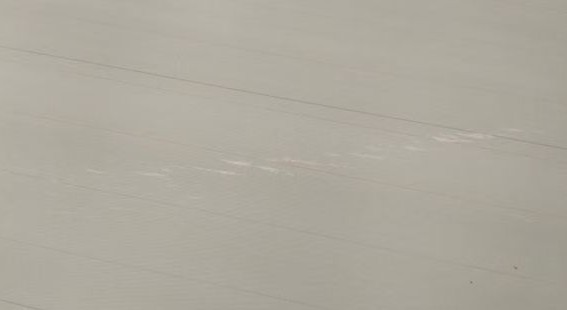
The root causes of severe forming fabric wear can generally be categorized into three main areas: mechanical friction/abrasion, hydraulic/operational factors, and fabric design mismatches.
1. Mechanical Friction and High-Vacuum Abrasion (The Primary Culprits)
On high-speed machines, the sheer velocity multiplies the friction generated between the moving fabric and stationary drainage elements.
Excessive Vacuum Levels on Stationary Boxes: To handle the massive amount of water at high speeds, mills often crank up the vacuum on forming boards, hydrofoils, or low/high-vacuum suction boxes. High vacuum tightly sucks the fabric down onto the blades, drastically increasing friction and causing rapid abrasive wear on the machine-side (bottom) yarns.
Abrasive or Damaged Ceramic Covers: * Improper Material: Blade covers must be made of high-grade ceramics (like silicon nitride or boron carbide). Lower-grade ceramics wear down quickly, creating microscopic micro-fissures or sharp edges that shave away the fabric’s filaments.
Blade Alignment and Leveling: If the ceramic elements are not perfectly leveled, or if there is a “re-entry” angle issue where the fabric hits a sharp blade edge rather than a flat surface, wear accelerates locally.
Misaligned or Frozen Rollers: If breast rolls, wire turning rolls, or couch rolls are misaligned, it introduces uneven tension profiles across the machine width. Furthermore, if any guide or return rolls experience bearing drag or freeze completely, the fabric will slide over a stationary metal surface, ruining it in hours.
2. Contamination and Raw Material Quality
Tissue production frequently utilizes recycled fiber (DIP) or lower-cost furnishes to manage margins, which introduces harmful abrasives into the system.
Filler and Ash Content: High levels of ash, calcium carbonate (CaCO3), clay, or titanium dioxide (TiO2) acting as fillers are highly abrasive. At high speeds, these microscopic particles get trapped between the fabric and the ceramic blades, acting like sandpaper (three-body abrasion).
Contaminants in Recycled Fiber: Micro-sand, silt, and grit that escape the stock preparation cleaning system lodge themselves directly into the void volume of the forming fabric, grinding down both the fabric and the ceramic covers.
Inadequate High-Pressure Showering: High-speed machines require pristine fabric cleaning. If the high-pressure oscillating showers have plugged nozzles, incorrect stroke synchronization, or insufficient pressure (below 20-25 bar), they will fail to knock out trapped contaminants, leading to localized “streak” wear.
3. Hydraulic Shear and Drag Force
At high speeds, the fluid dynamics of the stock jet hitting the fabric play a massive role.
High Jet-to-Wire Rush/Drag Ratios: Operating with a massive speed mismatch between the headbox jet velocity and the forming fabric speed creates intense hydraulic shear. A high “rush” (jet faster than wire) or high “drag” (wire faster than jet) forces fibers and abrasive fillers to scrape forcefully against the fabric during initial sheet tamping.
Incorrect Jet Impact Angle: If the headbox jet hits the forming fabric too early or too steeply relative to the forming board, it creates a high-pressure hydraulic “pocket.” This forces the fabric down hard onto the first few blades before a lubricating water film can form between the fabric and the ceramic.
4. Incompatible Fabric Design
Sometimes the root cause is simply that the chosen fabric structure isn’t built to survive a high-speed environment.
Low Machine-Side (CMD) Wear Volume: Forming fabrics have a “paper side” and a “machine side.” If the machine-side Cross-Machine Direction (CMD) yarns do not have enough mass, diameter, or a high enough wear-potential layout (like a robust 4-shed or 5-shed wear loop), the sacrificial material is consumed too quickly.
Inadequate Polymer Selection: Standard polyester (PET) has poor abrasion resistance when sliding over ceramics under high vacuum. High-speed fabrics require a high percentage of polyamide (PA/Nylon) or specialized co-polymers blended into the machine-side yarns to cope with the friction and toughness required.
Troubleshooting Action Plan
To pin down the exact root cause, Keylife suggests to try checking these variables systematically:
| Checkpoint | Target / Action |
| Fabric Analysis | Send a worn fabric to the manufacturer for a Caliper and Wear Profile Analysis. If the wear is perfectly uniform, it points to overall high vacuum or abrasive filler. If it’s streaky, look at showers or individual chipped ceramics. |
| Vacuum Optimization | Lower the vacuum on the first few suction boxes and rely more on activity/surface tension drainage. Ensure a water lubricating film exists over stationary elements. |
| Shower Audit | Verify that high-pressure needle showers are oscillating correctly, nozzles aren’t plugged, and the water pressure is optimized. |
| Ceramic Inspection | Perform a surface roughness test on the ceramic blades during the next shutdown to check for micro-chipping or scaling. |