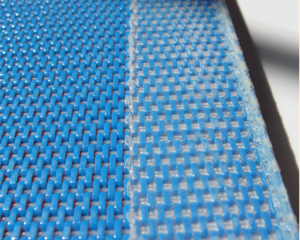
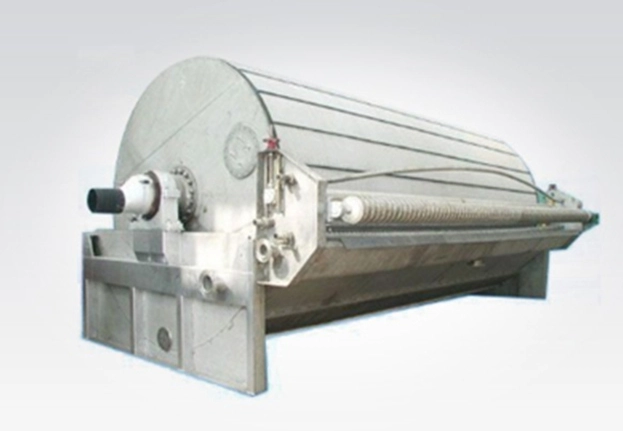
In modern pulp preparation and white water recovery systems, efficient solid-liquid separation is critical to maintaining a mill’s water loop closure, maximizing fiber savings, and protecting downstream equipment. At the heart of this process—typically deployed on rotary vacuum drum filters, brown stock washers, and disc filter Savealls—is heat-shrinkable filter fabric technology (commonly referred to as shrink sleeves).
By combining advanced polymer chemistry, heavy industrial textile engineering, and highly specialized manufacturing processes, this technology ensures wrinkle-free drum adherence, excellent filtrate clarity, and long operational lifetimes under harsh chemical and mechanical stress.
1. Core Manufacturing Technology & Engineering
The production of shrinkage fabric requires a precise balance between structural rigidity, filtration efficiency, and programmed thermal contraction.
Raw Material Selection & The Shrinkage Engine
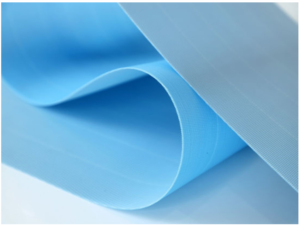
The defining feature of shrink fabric is its ability to contract tightly around a filter drum when treated with heat (usually hot water or steam) on-site. This relies on selecting high-grade synthetic polymers, primarily Polyester (PET) and Polyamide (Nylon).
During the yarn extrusion process, the synthetic filaments undergo differential molecular orientation—they are mechanically stretched and drawn while cool to lock in internal mechanical stresses. When the final fabric is heated in the mill, these molecules relax, generating a powerful, uniform contraction force (typically 10% to 15% shrinkage circumferentially) that clamps the fabric seamlessly to the metal drum.
Advanced Weaving Structures
Because white water contains highly abrasive microfibers, titanium dioxide (TiO_2), and sticky organic colloids, the weave structure must balance high drainage volumes with tight fiber retention.
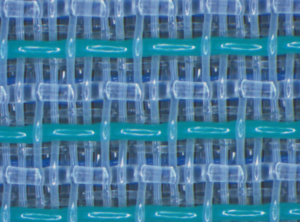
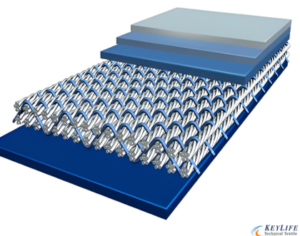
Asymmetric Satin Weaves: Manufacturers heavily utilize satin or twill weave patterns to create a dual-sided fabric. The cake side (outer layer) is dense and smooth, allowing the trapped pulp mat to release cleanly under the scraper. The drum side (inner layer) features an open, porous structure to maximize vacuum drainage.
Dual-Layer Fabrics: High-performance styles weave a fine-mesh upper layer directly into a coarse, heavy-gauge monofilament lower layer. The bottom provides the immense structural tension needed to grip the drum, while the top handles microscopic fiber retention.
Thermofixing and Supercalendering
Fabric cannot be allowed to shrink randomly in all directions. During factory finishing, the woven material is run through a stenter machine (an industrial heat-setting oven) under intense directional tension. This ensures unidirectional shrinkage, meaning the fabric will only shrink along its length (around the radius of the drum) and not its width, preventing exposed drum edges. Finally, the fabric passes through high-pressure, heated rollers (supercalendering) to flatten the surface filaments, calibrating air/water permeability and optimizing fiber release.
2. Critical Seaming Technology: The Woven Loop
The weakest point of any industrial filter loop is traditionally its seam. Traditional mechanical or zipped seams create a raised “bump” on the drum surface. When the mill’s doctor blades (scrapers) continuously hit this bump, it causes premature fabric tearing and blade wear.
                  [Interlocking Woven Loops]
   ===================( O ) ( O ) ( O )===================  <- Fabric Body
                       |||   |||   |||
                       \_________/
                            |
                   [Heavy Connecting Cable]
To solve this, advanced shrinkage fabrics utilize Woven Loop Seam Technology. During the weaving process, the warp yarns are woven back into the fabric body to form microscopic, integrated loops at the edges. When installed on the drum, these loops interlock perfectly, and a heavy joining wire (made of stainless steel or PEEK polymer) is threaded through. Because the resulting seam is identical in thickness to the rest of the fabric, it provides a completely flush, low-profile join that drastically extends the service life of both the fabric and the scraper blades.
3. Leading Suppliers and Product Styles
The global marketplace for pulp-grade shrinkage fabrics is highly specialized, led by industrial process giants and technical textile innovators.
Key Global Suppliers
Valmet (Finland): The global benchmark in integrated pulp mill technology. Valmet produces proprietary shrink sleeves (such as their high-performance SL Series) designed specifically for severe bleaching and washing stages, often providing full-service on-site installation and thermal shrinking.
Clear Edge Filtration (UK / Global): An industrial filtration leader specializing in heavy-duty, abrasion-resistant polymer blending. Their fabrics focus heavily on high-clarity filtrate yields to protect downstream shower nozzles from plugging.
ANDRITZ Group (Austria): A premier OEM provider for pulp mills, manufacturing highly calendered filter fabrics optimized for rapid cake release and minimal fiber blinding.
Sefar (Switzerland): Renowned for ultra-precise monofilament synthetic fabrics (Sefar TETEX line) utilized heavily in fine-particle separation and disc filters.
- Keylife: new provider to the market, and has several successful references.
Product Style Specifications
When specifying shrinkage fabric for mill procurement, engineers classify the product style based on operational environment:
| Specification Category | Style Option | Best Used For… |
| Material Style | Polyester (PET) | Standard white water filtration; neutral-to-acidic circuits; high standard shrink force. |
| Polyamide (Nylon) / PVDF | Highly alkaline or high-friction environments; aggressive chlorine dioxide bleaching stages. | |
| Weave Style | Single/Multi-Layer Satin | General white water recovery; provides a smooth face for clean fiber cake release. |
| Duplex / Double-Layer | Heavy-duty applications requiring high drainage rates alongside microscopic fiber retention. | |
| Seam Style | Integrated Woven Loop | High-speed, high-vacuum drums; standard for minimizing doctor blade wear. |
| Pin / Clipper Seam | Traditional or older equipment configurations where rapid mechanical zip-up is required. |
4. Operational Summary
By marrying polymer physics with heavy industrial weaving, modern shrinkage fabric technology offers pulp mills clear operational advantages:
Elimination of Slippage: Uniform thermal contraction guarantees a tight, wrinkle-free fit under intense vacuum pressures.
Downstream Protection: Calibrated pore sizes ensure high-clarity white water filtrate, preventing the plugging of expensive downstream shower nozzles.
Reduced Downtime: Smooth satin faces and flush woven loop seams reduce mechanical friction, directly extending the maintenance intervals of the pulp preparation mill.